About

I am a Postdoctoral Research Associate at the MRC Cognition and Brain Sciences Unit, University of Cambridge, working on projects within CamCAN and the Memory Control Lab.

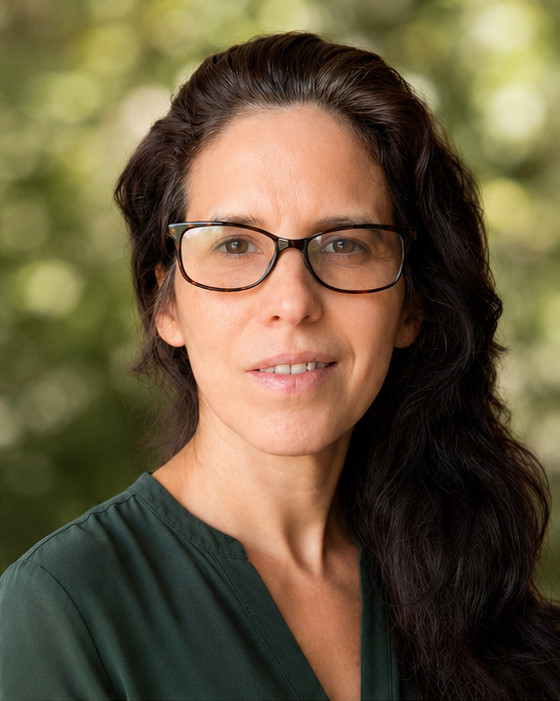
Portrait of Maite Crespo García

Research profile

My research investigates the brain mechanisms underlying episodic memory, cognitive control, and healthy ageing, with a particular interest in the role of brain oscillations in human cognition.

Since my PhD, I have combined behavioural experimentation with neuroimaging and brain stimulation methods, including intracranial EEG, scalp EEG, MEG, fMRI, and transcranial magnetic stimulation (TMS). I am also interested in advanced analytical approaches for integrating multimodal and large-scale datasets.

Biography

I earned my PhD in 2013 from the University Pablo de Olavide in Seville, Spain, under the supervision of Mercedes Atienza and José Luis Cantero.

I then completed a postdoctoral position at the University of Konstanz in Sarang Dalal’s group, where I was also a member of the Zukunftskolleg as a Marie Curie Fellow.

In 2017, I moved to Cambridge to join the MRC Cognition and Brain Sciences Unit and Michael Anderson’s group, supported by a Newton International Fellowship from the Royal Society. Since 2021, I have held a position as Research Associate.
Methods & Expertise

💻 Programming

PythonMATLAB

🧠 Neuroimaging & Brain Stimulation

EEGMEGfMRIIntracranial EEGrTMS

🛠️ Software

FieldTripSPM12MNE-Python

📊 Analytical methods

  • Time-Frequency Power
  • Phase Synchronization
  • Source Reconstruction (Beamforming)
  • Parametric Modulation
  • Spectral Parameterization

🤖 Professional Development in AI & Data Science

I continue to expand my conceptual and practical knowledge of machine learning and the latest advances in artificial intelligence. I am particularly interested in exploring how AI can support research workflows, from data analysis and programming to scientific writing, and how these technologies can be applied to my research in cognitive neuroscience. I am also committed to training in new tools and strategies that contribute to more efficient, transparent, and reproducible scientific practice.

Applied AI and Data Science Program

MIT Professional Education · Great Learning · 2026

A 14-week program, including theory and practical applications of supervised machine learning, decision trees, time-series analysis, neural networks, computer vision, recommendation systems, generative AI, prompt engineering, etc.

Accelerate Programme for Scientific Discovery

Department of Computer Science and Technology · University of Cambridge · 2025-2026

A series of 1-day workshops providing specialised training in AI techniques, equipping researchers with skills to use machine learning and AI to power their research. I have attended the following workshops:

  • Packaging and Publishing Python Code for Research workshop
  • Hands On AI Workshop
  • LLM Hands on Workshop
  • Generative AI
  • An Introduction to Docker Workshop

Profiles